
HVAC / Furnace repair
Furnace Repair for No Heat, Weak Heat or Unusual Cycling
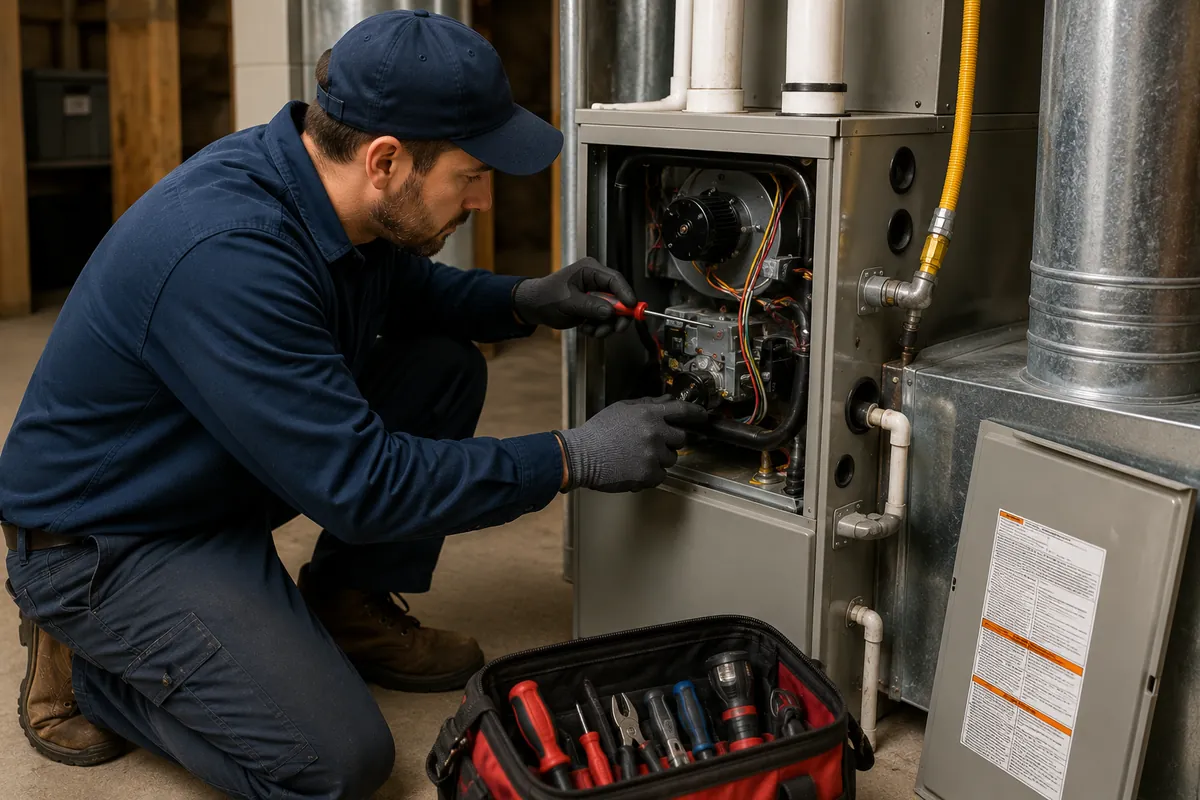
Explain whether the furnace starts, produces heat and keeps running. Those observations help frame a repair assessment without attempting gas or electrical work.
Current focus topic Featured in ResolveWay service discovery.
What are you noticing?
Furnace changes worth reporting
These observations can have more than one explanation and do not confirm a cause.
No heat when heating is requested
Note the thermostat setting and whether the furnace starts at all. A no-heat symptom is not a diagnosis.
The furnace starts, then stops
Describe what you hear and how long operation lasts without removing covers or attempting ignition work.
Heat or airflow is weaker than usual
Record whether all rooms or only some are affected and when the change began.
New noises or concerning odors
Keep clear of the equipment. If you suspect a gas leak or a carbon monoxide alarm sounds, leave the area and seek emergency assistance from a safe location rather than wait for an ordinary repair call.
Professional-service context
What furnace repair service may involve
An independent provider determines the appropriate assessment, findings, scope, and proposed work.
- 01
Depending on the furnace type, a professional may assess thermostat calls, controls, airflow, the operating sequence and relevant venting or combustion components.
- 02
Request an explanation of the observed fault and the proposed repair. A gas-furnace assessment differs from work on other heating equipment.
- 03
Do not open combustion chambers, manipulate fuel valves or bypass controls. Describe observations from normal accessible areas.
Situation guide
Which information may relate?
Use observable context to explore only currently published service topics.
No heat or repeated shutdown
Ask for a furnace fault assessment and explain the operating pattern.
A possible safety hazard
Suspected gas or carbon monoxide is a safety issue first, not a routine appointment-selection exercise.
Repair history raises questions
Compare a documented repair proposal with replacement scope, condition and parts availability.
Working equipment needs routine care
Maintenance and a current malfunction are separate requests; explain which you need.
Know which heating system you are describing
If safely available, note whether you have a gas or electric furnace and its model information. If you are unsure, say so. A heat pump, boiler or other system can require different expertise; a heating complaint alone does not identify the equipment.
Prepare without opening the furnace
Record thermostat settings, when heating changed, affected rooms and the start/stop pattern. Share recent maintenance or repair history. Do not work on gas connections, burners, wiring or safety switches.
Questions about repair and replacement
Ask which finding explains the problem, which parts are proposed and how operation will be checked. Equipment condition, repeated repairs, parts availability and household needs can inform a separate replacement discussion. Request comparable written scopes rather than deciding from equipment age alone.
Scope, price and the next step
Access, furnace type, diagnostic work and required components can change the proposal. Ask about assessment fees, parts and labor, and approval for additional work. Use a contact option if shown to confirm that the provider handles your system and to discuss terms; ResolveWay does not perform heating repairs.
Frequently asked questions
What should I report when my furnace produces no heat?
Explain the thermostat setting, whether the furnace starts and whether air moves from vents. Mention when the change began without attempting internal repairs.
Why does a furnace start and then shut down?
Several operating or control conditions can produce that pattern. Record what happens so a professional can assess it; do not bypass a control to keep it running.
Is gas furnace repair a do-it-yourself task?
Gas, combustion and electrical work should be left to an appropriate professional. If you suspect a gas leak, leave and seek emergency assistance from a safe place.
Does weak heat always mean the furnace needs replacement?
No. The symptom needs evaluation. Compare repair and replacement only after the findings, equipment condition and scope have been explained.
What if I do not know my heating system type?
Share safely visible model information or describe the equipment without opening it. Ask the provider to confirm whether they handle that system before arranging work.
What should I ask about a furnace repair quote?
Ask about diagnostic charges, the proposed parts and labor, how additional findings require approval and how completed work will be checked.