
Water damage restoration
Water Damage Restoration: Safety, Drying and Next Steps
Stay out of unsafe or contaminated areas. Stop the source only if safe; otherwise seek appropriate assistance. Document what happened from a safe location, then discuss assessment, drying and affected materials with a professional.
Service explorer
Find the right water damage restoration topic
The linked topics below have detailed guides. Other concerns are described here to help you understand the broader service options.
Current focus area ResolveWay currently gives this category added prominence in service discovery.
Read the guidance below for common concerns and next steps. Detailed service guides are not currently listed.
Practical guidance
Start with what you can observe
Observable details can help narrow the information to review without identifying a cause or promising a particular outcome.
Common concerns
- 01Water is still entering
Source control and restoration are separate needs. Do not enter standing water or approach wet electrical equipment to stop a leak.
- 02Standing water or soaked materials
Describe rooms and materials from a safe location. Avoid contact with floodwater, sewage or water of uncertain cleanliness.
- 03Surface water is gone but materials remain damp
Visible dryness does not establish that the affected assembly is dry. Ask how moisture will be evaluated.
- 04Staining, odors or visible growth
Report these observations. Mold may require a separate assessment; do not disturb suspect or contaminated materials.
Possible next paths
- 01First: make safety the priority
Keep away from electrical, contamination and structural hazards. Seek emergency assistance for an immediate danger.
- 02Next: identify source-control work
A plumbing, roof or appliance fault may need its own repair before restoration can proceed effectively.
- 03Then: agree on assessment and drying
Ask how affected areas, moisture and material condition will determine water removal and drying work.
- 04Finally: clarify cleanup and repairs
Establish which material removal, cleaning and reconstruction tasks are included or handled separately.
What water damage restoration may involve
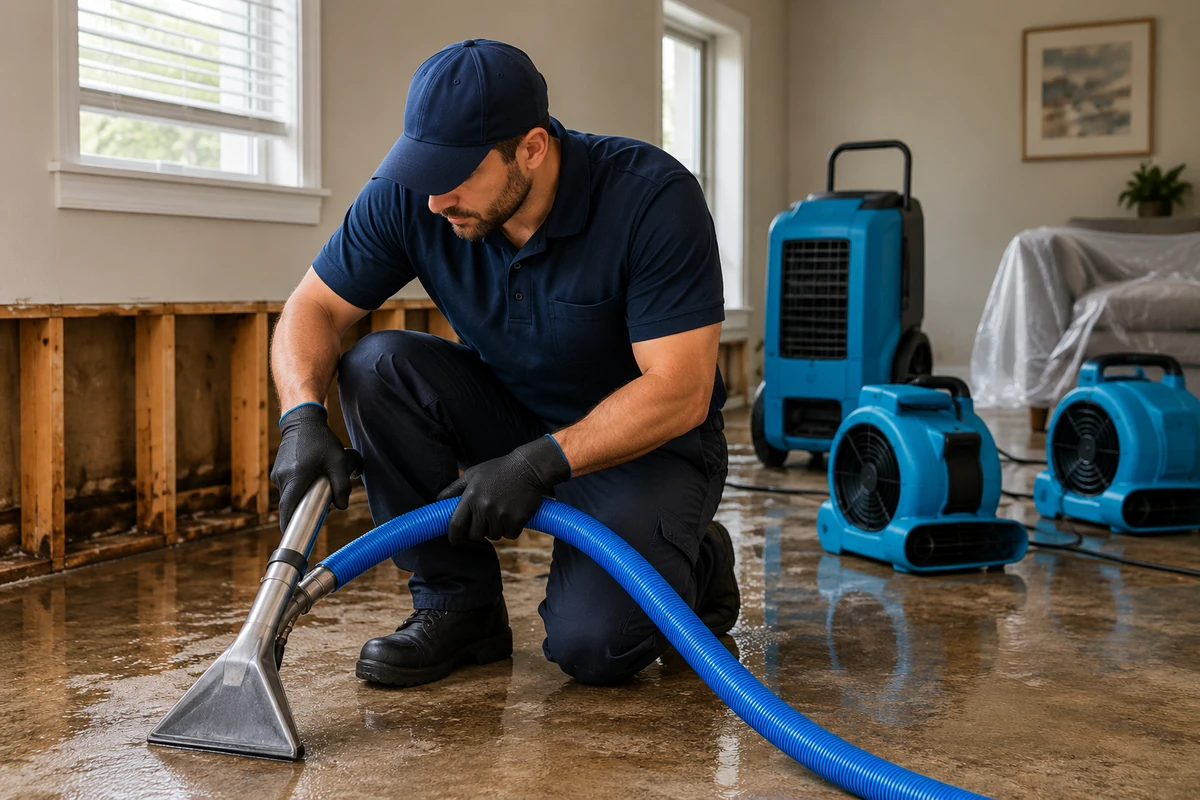
The sequence depends on safety, the water source and affected materials. A professional may assess the damage, remove standing water where required, evaluate moisture, plan drying and dehumidification, and explain cleanup needs. Ask how progress and completion will be assessed rather than relying only on whether a surface looks dry.
Drying, cleanup and damaged materials
Some affected materials may need removal or separate treatment. Ask what can be retained, what cannot be evaluated yet and how decisions will be documented. Do not handle sewage-contaminated materials or disturb suspected mold yourself. Mold remediation, fire restoration and reconstruction are not automatically included in a water-damage proposal.
Record what happened without delaying safety
When it is safe, note when water was discovered, its apparent source, whether it is still entering, and affected rooms and belongings. Take available photos and retain relevant records. Contact your insurer about documentation and policy requirements; neither this website nor a restoration proposal establishes insurance coverage.
Source repair and restoration are different
A repaired pipe or roof may stop further entry while leaving water and damaged materials behind. Conversely, drying work does not repair a failed supply line or roof. Ask who is responsible for each scope and how the work will be coordinated.
What changes restoration scope and cost?
The extent of wet areas, water condition, materials, access and drying or cleanup requirements can affect work. Request the assessment, proposed equipment or methods, monitoring arrangements, material decisions and charges in writing. Confirm separately whether repairs or reconstruction are included.
Discuss the next action
Describe the situation before requesting a particular drying method. Confirm that any provider you contact handles the relevant type of damage and ask about timing and terms. ResolveWay does not perform restoration or promise emergency availability.
Frequently asked questions
What should I do first after discovering water damage?
Keep clear of unsafe water, wet electrical equipment and structural hazards. Stop a source only if it is safe and practical; otherwise seek appropriate assistance. Document from a safe location.
Is water extraction the whole restoration process?
No. Removing standing water may be one step. Moisture evaluation, drying, cleanup and damaged-material decisions may still be needed.
Can materials still be wet after visible water is removed?
Yes. Ask how a professional will evaluate affected materials and assess drying progress rather than judging only the surface.
Does restoration repair the leaking pipe or roof?
Not necessarily. Source repair and work on affected materials are separate scopes. Ask who will handle each before agreeing to work.
Is mold remediation included automatically?
No. Report visible growth or persistent odors and ask whether a separate assessment or specialist scope is appropriate. Avoid disturbing suspect materials.
Will insurance pay for water damage restoration?
Coverage depends on the policy and circumstances. Ask your insurer about documentation and applicable requirements; a provider contact or estimate does not establish coverage.